最後のボトルネック
Cursorはソフトウェア開発を再構築しました。Figmaはデザインを再構築しました。そして今日、Amplitudeが分析を再構築します。

30年前、ソフトウェアはパッケージ包装されたディスクで出荷され、小売店の棚で販売されていました。製品を顧客に届けるには、製造、パッケージング、流通の取引が必要でした。これらのプロセスはすべて複雑だったため、開発者から購入者の手に届くまでの道のりは障害だらけでした。
それ以来、製品開発における大きな変化があるたびに、1つずつボトルネックが取り除かれていきました。インターネットの登場により、流通はなくなりました。クラウドと継続的デプロイにより、イテレーションの摩擦が取り除かれ、年1回しかリリースできなかったチームが毎日リリースできるようになりました。今日、LovableやCursorなどのAIツールは、技術的な複雑さをさらに解消しています。これらのAIツールにより、コーディング言語の制約が取り除かれたことで、技術的な専門知識の有無に関係なく、より多くの人がより迅速にプロトタイプを作成し、構築できるようになりました。今や、1つのチームが数時間で新機能をリリースできるのです。実際に多くのチームが継続的に短時間でリリースしています。
しかし、これらの変化のいずれも、最も重要な質問を解決することはできませんでした。それは、「正しいものを構築しているか?」ということです。
構築速度が学習速度を上回っている現状
今日のチームは、昼食前に新機能をリリースし、夕食までに次のビルドに移行しています。キャンペーンは午前中に開始されますが、毎月の指標レポートが出るまでパフォーマンスを把握することはできません。チームが開発した機能を実際にユーザーがどのように体験しているかを理解するには、データシステムを接続し、アナリストの対応を待ち、次のスプリントが始まる前に正しい質問に答えられるよう願う必要があります。
理解せずにスピードを早めてしまうと、単にスプリントやキャンペーンを無駄にするだけでなく、間違った決定を下すたびにコストが増大することになります。欠陥のある仮定に基づいて構築されたすべての機能は、今や素早くリリースされ、間違った指標に対して最適化されたキャンペーンは迅速にスケールしてしまいます。ユーザーの行動に関する明確なインサイトなしにローンチされたすべての実験は、顧客を引き付けるよりも早く顧客を遠ざけてしまう可能性があります。チームがリリースの速度を優先する前に、正しい方向に進んでいるかどうかを判断するためのワークフローが必要です。
というのは、チームは単に迅速にリリースしているのではなく、迅速かつ盲目的にリリースしているためです。リリースするものと機能するものの間をつなぐ方法がなければ、スピードを速めても本質的に価値は生み出されず、成長を停滞させるだけです。
レポートから推論へ
この製品評価のボトルネックは、データ不足が原因ではありません。チームはこれまで以上に多くのデータを持っています。また、ツールの不足が原因でもありません。分析市場は巨大です。問題は、ほとんどの分析プロセスが、AIが他のすべてを変える前と同じ方法で動いていることです。誰かが質問がある場合、アナリストにチケットを提出します。数日または数週間後にダッシュボードが作成されますが、これが役に立つのはあくまで最初に正しい質問をした場合のみです。
四半期ごとにリリースしていた時代には、このワークフローは許容されていました。毎日リリースする場合はこれではだめです。製品、キャンペーン、実験がAIのスピードで動く世界では、積極的に分析をそのスピードに合わせなければなりません。継続的に分析を行い、誰かが知りたいと思う前に、リアルタイムで何が起こっているのかを推論して重要なものを明らかにする必要があります。過去についてレポートを作成してしまうと、失敗につながります。今日の分析ツールは、チームが現状を理解し、次に何をすべきかを決定するのを積極的に支援する必要があります。
そのような進化を遂げるには、根本的に異なる基盤が必要となります。
AIスケールの分析には、完全な行動コンテキストが必要
正しいものを構築したかどうかを判断するには、データウェアハウスとクエリレイヤーだけでは不十分です。行動データとファネル、セッションリプレイ、アンケートのフィードバック、サポートの会話など、ユーザーエクスペリエンスの全体像が必要となります。ユーザーの行動、感情、行き詰まりの原因に関するリアルタイムデータを組み合わせる必要があります。
しかし、それではユーザーシグナルは全体像の半分にすぎません。AIは、チームに関するコンテキストも理解する必要があります。
- 現在、どのような質問が寄せられているか?
- 最近作成されたチャートと指標はどれか?
- 分類体系はどのように進化してきたか?
- 製品やキャンペーンの変更に伴って、優先順位はどのように変化しているか?
この終始変化するコンテキストがなければ、強力なAIであっても、表面的な回答または誤解を招く回答しか生み出せません。そのため、データウェアハウスの上にLLMを配置するだけでは、有意義なインサイトの入手を期待することはできません。何が起こったのかを素早く尋ねることはできたとしても、最も重要なこと、つまり、なぜ起こったのかを診断し、次に何をすべきかを判断することができません。真の理解を得るには、ユーザーエクスペリエンスの全コンテキストと、ユーザーに対するチームの開発意図を融合させる必要があります。
分析はインテリジェントなだけでなく、エージェント型でなければならない
現在、分析の運用上の負担は依然として人々に課されています。製品が変化するにつれて、誰かが分類体系を維持する必要があります。システムが徐々に劣化しないように、古いデータや壊れたデータをクリーンアップする作業も必要です。また、誰かが行動パターンとユーザーフィードバックを、次に何を修正、テスト、または構築するかについての具体的なアイデアに結びつける必要があります。これらの作業はすべて不可欠ですが、拡張できるものはほとんどありません。
エージェントによる分析は、これらの作業の解決策となります。利用する基盤を維持および進化させ、依頼されなくてもコンテキストを最新の状態に保ち、チームが引き継ぎを待つことなくインサイトから行動に移行できるようにします。分析は、クエリを実行する受動的なシステムではなくなり、構築、リリース、成長の方法に積極的に関係するようになります。
Amplitude AI分析プラットフォームのアップグレード
Cursorはソフトウェア開発でできることを再定義し、エンジニアの作業速度を最大10倍に高め、コードを1行も書いたことがない人でも構築できるようにしました。今こそ、分析の時代です。
弊社は、AI分析プラットフォームにAmplitude エージェントを追加します。これは、より多くの人々やチームが行動データとユーザーエクスペリエンスの全体的なコンテキストを理解するための扉を開くエージェントシステムです。
Amplitude エージェントは、カスタマージャーニー全体で何が起こっているかを継続的に感知し、何が重要で、なぜ重要なのかを判断します。さらに、実験やパーソナライゼーションなどを通じて行動します。AI分析を使用すると、チームは製品の構築後、数週間ではなく数分でその影響を評価することができます。結果として、手動による分析と比較して10倍の生産性の向上を実現できます。
その仕組みについて説明します。
Amplitude グローバルエージェント
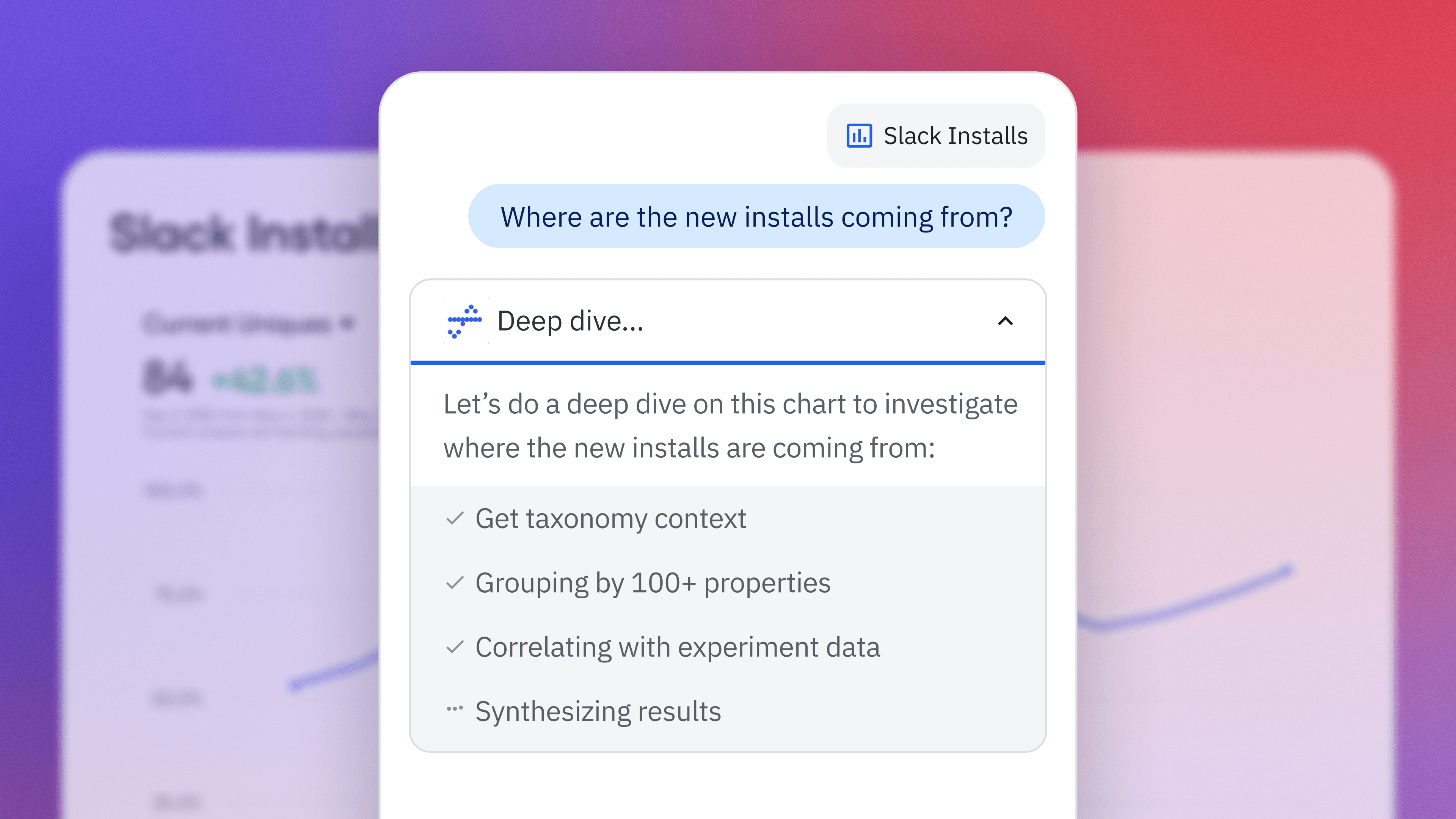
Amplitude グローバルエージェントは、行動データ、ジャーニー、実験、セッションリプレイ、フィードバックなど、Amplitudeプラットフォーム全体を分析してアクションを実行できます。また、最近の質問、新しいグラフ、指標の変更、優先順位の更新など、チームが何に焦点を当てているかのコンテキストも組み込まれています。質問に答えるためのグラフを作成するだけでなく、分かりやすい言葉で会話をし、分析的な問い合わせを通じて誰もがフォローアップできるよう促します。
グローバルエージェントは、完全な調査を実行し、データソース間のパターンを結びつけ、具体的な次のステップを準備します。これまで数日から数週間かかっていた根本原因分析が、手動調査よりも高い精度で数分で完了します。すべての調査が完了すると、次に取るべき適切なステップについて推奨事項を提示することもできます。また、チームがほとんどの時間を費やすSlackやTeamsからもアクセスできます。
「私たちは、Amplitude AIがコンテキストを認識する仕組みに感銘を受けています。Amplitude AIが見ているデータと引き出してくれる洞察は素晴らしい。当社のビジネスを本当に理解しているように思えます」
Zack Chang
Complex、プロダクトマネジメントディレクター(米国)
専門エージェント
グローバルエージェントがチームの調査と決定を支援する一方、専門エージェントはチームが重要なものを見逃さないようにします。単一のドメインまたはワークフロー専用に構築されており、スケジュールに基づいて実行され、何が起こっているのかを分析し、要約、機会、推奨されるアクションをAmplitude エージェントページ、メール、またはSlackにプッシュします。
現在、4つの専門エージェントが利用可能です。
- ダッシュボード監視エージェント:あらゆるダッシュボードからインサイトを自動生成し、興味深い傾向や異常を深く掘り下げ、スケジュールに従って積極的な監視を実行するため、問題が発生する前に明らかになります。
- セッションリプレイエージェント:数百のセッションをスケジュールに基づいてレビューし、コンバージョンの喪失につながる摩擦とパターンを特定します。影響を定量化した具体的な修正案を提示します。
- ウェブサイトコンバージョンエージェント:実験を提案し、バリアントを生成し、実験構成を作成します。ユーザーの許可を得て、ローンチを実行し、ロールアウトの決定とともに結果を共有します。
- フィードバックエージェント:非構造化フィードバック(アンケート、チケットなど)から上位のテーマの要約をスケジュールに基づいて生成し、チームが見逃しがちな実用的なインサイトを提示します。
「Amplitudeは、NTTドコモが1,000人以上のアクティブユーザーを対象にセルフサービス分析を拡張し、キャンペーンの有効性を分析するのに必要な時間を大幅に短縮するのに役立ちました。Amplitude AIエージェントを使用することで、当社のチームは既存のダッシュボードから直接分析を合理化し、コンバージョン率を向上させ、取得あたりのコストを削減しながら、より迅速に作業を進めることができます」
Takashi Suzuki
NTTドコモ、データプラットフォーム部長(シニアバイスプレジデント)
モデルコンテキストプロトコル(MCP)サーバー
MCPを使用すると、Amplitudeの行動インテリジェンスを、既存のAIワークフロー内で直接利用できます。ワークフローを離れることなく、質問をしたり、問題を調査したり、見つけたことに対応したりできます。インサイトは、事実の把握後ではなく、意思決定の瞬間に表示されます。
AIアシスタント:ClaudeまたはChatGPTに、ユーザーの行動の要約、チャートの作成、Amplitudeのデータを使用した製品またはキャンペーンの質問への回答を行うよう依頼できます。
開発:CursorまたはClaude Code内の製品コンテキストを使用して、検証、デバッグ、影響の追跡を行います。GitHubプルリクエストに行動コンテキストを追加できます。AWS Kiroに統合された製品インサイトを使用して、AI機能を構築し、リリースすることが可能です。
デザインとプロトタイピング:製品のパフォーマンスとフィードバックを使用して、魅力的なコンセプトを検証して改善します。ユーザーフリクションを特定し、Figma Makeでデータに裏打ちされたプロトタイプを生成できます。
製品とコラボレーション:Notionエージェントを使用して製品の機会を分析し、明らかにします。Atlassian RovoでAmplitudeのチャートと分析を検索することが可能です。
セールスとエンゲージメント:行動シグナルを使用して、アウトリーチのメッセージとターゲティングをパーソナライズします。
「Amplitude MCPとSkillsは、ユーザーインサイトをCursorのエージェントコンテキストに直接もたらします。これにより、チームはツールを切り替えることなく、機能を迅速に提供し、効果を測定し、次のリリースのためによりスマートな実験を構築できます」
Joshua Ma
Cursor、エンジニアリングリード
個別の機能としてではなく、単一のシステムとして提供
グローバルエージェント、専門エージェント、MCPは、別々の製品ではありません。行動データ、終始変化するコンテキスト、エージェント推論の共有基盤の上に構築された単一のシステムです。グローバルエージェントはリアルタイムで調査を行います。専門エージェントは重要なワークフローを自動化します。MCPは、チームが作業を行っている場所にすべてを配置します。これらが一体となって、業界の他の企業が放置してきた「構築と学習の間のループ」を閉じます。
未来を手に入れるのは、リリースと同じ速度で学習するチーム
構築速度はもはや競争力ではありません。AIにより、すべてのチームが非常に速くリリースできるようになりました。重要なのは、どれだけ早く何を構築すべきかを理解し、その知識を一貫した行動に変えることができるかということです。
人間の速度で分析を行っていると、遅れを取ってしまいます。今後は、AIで分析をスケールしましょう。行動コンテキストに基づき、継続的に推論し、インサイトに基づいて行動を起こします。そしてチームが作業している場所に組み込まれます。
これがAmplitudeが構築している未来です。そして、それは今日、利用可能です。
3月5日(木)に舞台裏をのぞいて、実際の機能をご覧ください。プラットフォームを最もよく知る開発者たちが、その仕組みをご紹介します。お早めにご登録ください。

Spenser Skates
CEO and Co-founder, Amplitude
Spenser is the CEO and Co-founder of Amplitude. He experienced the need for a better product analytics solution firsthand while developing Sonalight, a text-to-voice app. Out of that need, Spenser created Amplitude so that everyone can learn from user behavior to build better products.
More from Spenser


