
I care a lot about customer feedback. Any PM does. But I don’t think our ability to act on it should depend on having the time to read every individual report, assess its importance, connect the dots between reports, outline a solution, and get it prioritized. Any PM will tell you that (very important) work can eat up an entire day or more.
That’s a pretty fragile and expensive system! Especially when the evidence that something deserves attention is spread across five customers and three months of conversations.
As a Growth Product Manager at Amplitude, my job is to help people get more value from Amplitude today and figure out what will make it more valuable tomorrow. Keeping up with today’s friction can easily eat up the time for tomorrow.
Amplitude Wave gives me more time to think about where the product should go next. It follows customer feedback and finds friction I might otherwise miss or never find time to investigate. Finding and addressing that friction takes real effort from PMs, designers, and engineers. When I think about self-improving products, this is the work I want help with: connecting the signals, investigating the problem, and getting us closer to a fix.
Getting from a customer report to something we can act on
Imagine a customer reports a problem. Before we can prioritize it, I have to understand a few things: is this a one-off? Have other customers mentioned it? Are people getting stuck without telling us? And what would solving it involve?
These are the right questions, but answering them takes precious time. It also takes some institutional memory. A report today might sound a lot like something another customer mentioned two months ago. Hopefully someone remembers that conversation and knows where to find it. Hopefully that someone isn’t on vacation.
I have Wave listening to the Slack channels where our customer feedback comes through. It connects related reports over time, keeps the customer details together, and builds the case for a fix.
For example, if five customers independently report the same issue over three months, Wave can bring those reports into one opportunity, with supporting evidence and a suggested solution outline. I don’t have to catch all five conversations or reconstruct the history myself.
Wave proactively looks for friction we haven’t thought to investigate. Customer feedback tells us what people took the time to report. Plenty of frustrating experiences go unreported. They still add up and make the product feel hard to use.
Cassie Peretore
Senior Product Manager, Amplitude
Wave changes where my work starts. It now starts with a clear problem, supporting evidence, and a proposed solution, without having to piece it all together from Slack threads and support tickets.
Two recent fixes show what that looks like.
Starting the replay at the part users care about
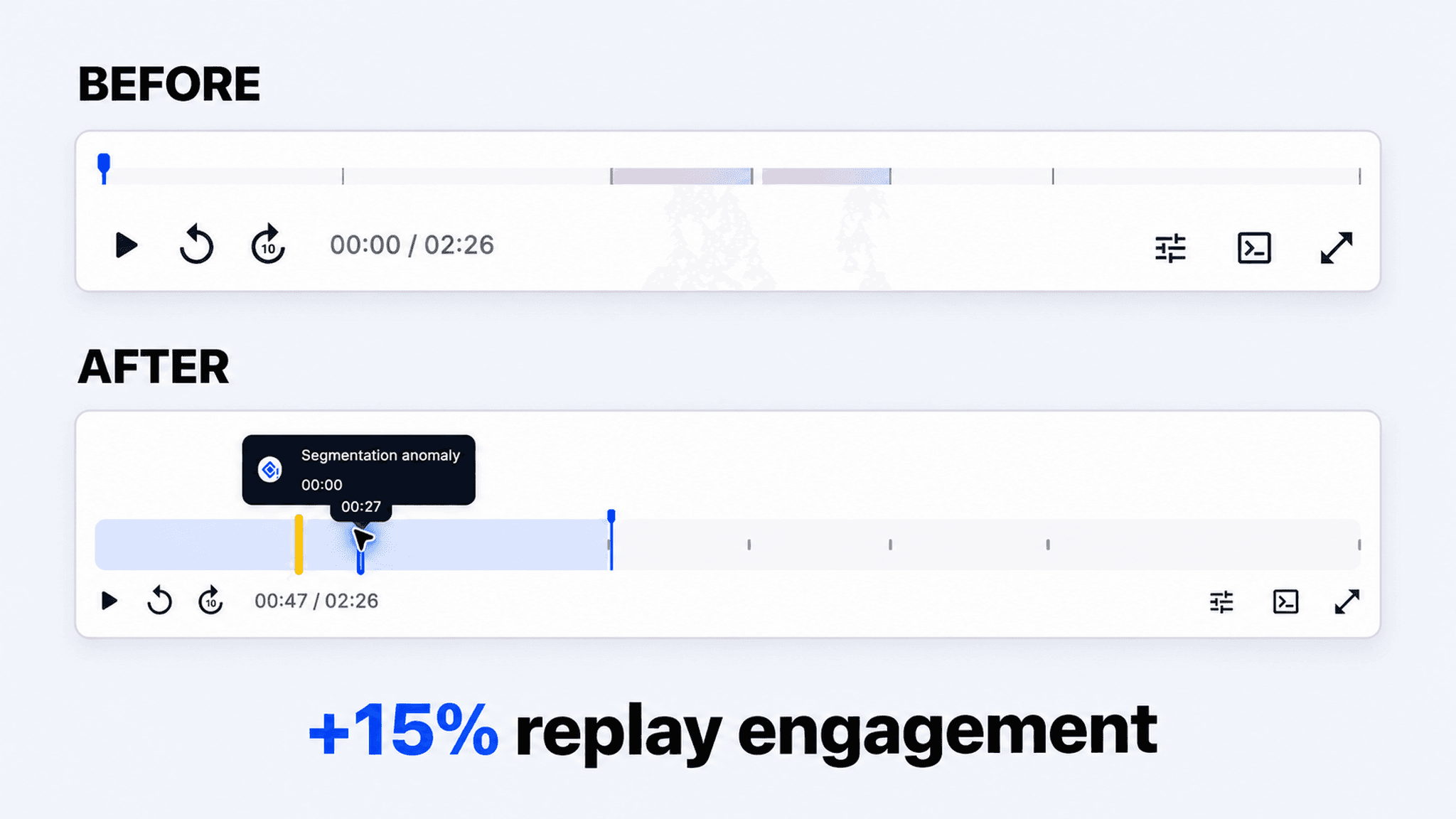
You open a session replay from a funnel chart because you want to understand why users drop off. But the recording starts at the beginning. So you have to scrub through the timeline to find the problem you originally came to investigate. Maybe it’s at 2:05? Maybe at 5:10?
You have to investigate the video in the product before you can start your investigation into the problem. A bit rude, honestly.
We used Wave to change that process. It surfaced the issue and suggested a fix: start session playback about two seconds before the relevant moment and mark it on the timeline. In the 30 days after we implemented this fix, the average daily replay launch rate from those chart investigations rose by 15%. The higher rate held beyond the initial launch period.
I might never have noticed or prioritized this. But it could be massive for a customer, saving them extra time and effort on every replay they open.
Unblocking dead ends when sharing to Slack
Wave also found a dead end in the flow to send dashboard subscriptions to Slack. An outdated Slack connection or permissions snag would leave the channel selector blank, with no way forward.
It leaves our users left wondering: Is it still loading? Is this a bug? Should I close it and try again?
Wave outlined a fix: let users reconnect inside the setup window, explain how to add private channels, and offer an option to enter a channel ID manually. Users created 14.5% more Slack subscriptions as a result.
Across both examples, Wave helped turn friction that might have gone unnoticed into something the team could evaluate and act on. Since it does so much of the research and planning upfront, it’s easier to take action on fixes. It’s much simpler to kick off a project when the plan is already written compared to just another investigation idea on my “I will totally get to that tomorrow” list.
What I actually want from a self-improving product
There’s always another roadmap priority. If every friction fix requires someone to connect months of feedback, investigate the problem, build the case, and outline a solution from scratch, worthwhile fixes won’t happen. Or we’ll tackle them by pushing something else back.
Wave takes on a meaningful part of that work. It connects reports we might otherwise triage separately and finds problems we might never have looked for. We get a head start on understanding what deserves attention and how to address it.
That’s what I want from a self-improving product: help keep the experience quality high while we build what comes next.
We hire thoughtful PMs, designers, and engineers because their judgment matters. Giving them more time to use it benefits customers too: more room to explore ideas, prototype, and figure out where the product should go.
I still want to hear from customers. I just don’t want fixes to get bottlenecked by my human limitations or my ability to keep up with Slack. Instead, I want something that frees up more time for me to ask, “What can this product solve that customers don’t even know they need yet?”