Platform

AI

AI Agents
Sense, decide, and act faster than ever before
AI Visibility
See how your brand shows up in AI search
AI Feedback
Distill what your customers say they want
Amplitude MCP
Insights from the comfort of your favorite AI tool

Insights

Product Analytics
Understand the full user journey
Marketing Analytics
Get the metrics you need with one line of code
Session Replay
Visualize sessions based on events in your product
Heatmaps
Visualize clicks, scrolls, and engagement

Action

Guides and Surveys
Guide your users and collect feedback
Feature Experimentation
Innovate with personalized product experiences
Web Experimentation
Drive conversion with A/B testing powered by data
Feature Management
Build fast, target easily, and learn as you ship
Activation
Unite data across teams

Data

Warehouse-native Amplitude
Unlock insights from your data warehouse
Data Governance
Complete data you can trust
Security & Privacy
Keep your data secure and compliant
Integrations
Connect Amplitude to hundreds of partners
Solutions
Solutions that drive business results
Deliver customer value and drive business outcomes
Amplitude Solutions →

Industry

Financial Services
Personalize the banking experience
B2B
Maximize product adoption
Media
Identify impactful content
Healthcare
Simplify the digital healthcare experience
Ecommerce
Optimize for transactions

Use Case

Acquisition
Get users hooked from day one
Retention
Understand your customers like no one else
Monetization
Turn behavior into business

Team

Product
Fuel faster growth
Data
Make trusted data accessible
Engineering
Ship faster, learn more
Marketing
Build customers for life
Executive
Power decisions, shape the future

Size

Startups
Free analytics tools for startups
Enterprise
Advanced analytics for scaling businesses
Resources

Learn

Blog
Thought leadership from industry experts
Resource Library
Expertise to guide your growth
Compare
See how we stack up against the competition
Glossary
Learn about analytics, product, and technical terms
Explore Hub
Detailed guides on product and web analytics

Connect

Community
Connect with peers in product analytics
Events
Register for live or virtual events
Customers
Discover why customers love Amplitude
Partners
Accelerate business value through our ecosystem

Support & Services

Customer Help Center
All support resources in one place: policies, customer portal, and request forms
Developer Hub
Integrate and instrument Amplitude
Academy & Training
Become an Amplitude pro
Professional Services
Drive business success with expert guidance and support
Product Updates
See what's new from Amplitude

Tools

Benchmarks
Understand how your product compares
Templates
Kickstart your analysis with custom dashboard templates
Tracking Guides
Learn how to track events and metrics with Amplitude
Maturity Model
Learn more about our digital experience maturity model
Pricing
LoginContact salesGet started

AI

AI AgentsAI VisibilityAI FeedbackAmplitude MCP

Insights

Product AnalyticsMarketing AnalyticsSession ReplayHeatmaps

Action

Guides and SurveysFeature ExperimentationWeb ExperimentationFeature ManagementActivation

Data

Warehouse-native AmplitudeData GovernanceSecurity & PrivacyIntegrations
Amplitude Solutions →

Industry

Financial ServicesB2BMediaHealthcareEcommerce

Use Case

AcquisitionRetentionMonetization

Team

ProductDataEngineeringMarketingExecutive

Size

StartupsEnterprise

Learn

BlogResource LibraryCompareGlossaryExplore Hub

Connect

CommunityEventsCustomersPartners

Support & Services

Customer Help CenterDeveloper HubAcademy & TrainingProfessional ServicesProduct Updates

Tools

BenchmarksTemplatesTracking GuidesMaturity Model
LoginSign Up

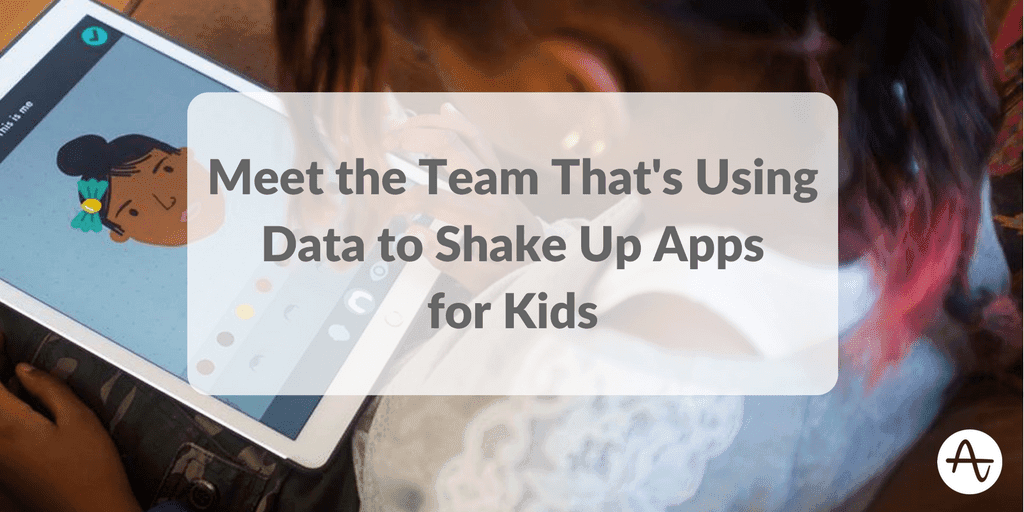
Meet the product team that’s using data to shake up apps for kids

We recently talked to Leah Feuer, Head of Product at Tinybop, to learn more about how they implement analytics in their apps.
Customers

Feb 23, 2017

6 min read

Alicia Shiu

Alicia Shiu

Former Growth Product Manager, Amplitude

Meet the product team that’s using data to shake up apps for kids

Remember the days when online gaming consisted of terrible design and graphics with heavily pixelated characters? Thankfully, technology has improved and those days are behind us. Launched in 2012, Tinybop is part of a growing market of educational apps for kids. In an age where tech rules, they’ve adapted to the changing landscape to accommodate how children learn and play. Their slogan says it all: Toys for Tomorrow.

Amplitude's blog image

(Source: Robot Factory)

They’re not just doing well; they’re absolutely crushing it. Tinybop has won a ton of awards since they launched, and in 2015, their Robot Factory app won iPad app of the year. Their apps The Everything Machine and Simple Machines also won App Store awards that year. We recently talked to Leah Feuer, Head of Product at Tinybop, to learn more about how they implement analytics in their apps. We discussed how Tinybop uses Amplitude and the difference it has made in their approach to product analytics. More specifically, we focused on how Amplitude helped Tinybop solve their stickiest data-collection problem.
Tinybop’s process around using Amplitude

Of the 24 people working at Tinybop, the product, UX, and research teams are the active Amplitude users. As the head of product, Leah finds herself using the platform frequently. She says, “I use it on a monthly basis and the time spent in it during those times is fairly quick,” she continues, “more time is spent in it when there’s a specific question we want to answer. At that point, I dig into the data I need.” During peak times, the number of active Amplitude users jumps as the data insights inform the work of the product, UX, and research teams. The amount of usage really depends on the time of year. “There’s heavy use when we’re trying to build new apps or learn more about a specific app,” Leah says.

Amplitude's blog image

8 of Tinybop’s apps from the Explorer’s Library collection. (Source)

For instance, if they find that abandon rates are high within an app because users are clicking the home button out of frustration at a particular spot, they can dive deeper into that spot and figure out what’s wrong. Their goal is to fully understand the behaviors that users are taking within each app.

How they learn

To test their apps during development, Tinybop assembles groups of kids for “play tests.” Their goal is to track how their target audience uses the apps during these sessions. Since their apps are available offline, they can’t run traditional A/B tests which would require the apps be connected to the internet. Instead, they use the following process:

  • Identify an issue during play test and tag it for updates
  • Work with the research team to uncover specific user pain points
  • Figure out what questions can be answered in Amplitude and what can be answered in play tests. Changes are made based on these insights.
    If the answer can be found in Amplitude, Leah uses Pathfinder to track use patterns. “We love Pathfinder because it helps us identify pain points in navigation and anything that might lead to home-ing the app. This tool has had a big impact on our UX decisions and allows us to make more intuitive and scaffolded experiences for kids.” Pathfinder allows them to be flexible with how they approach design. They don’t have to be constrained with a particular flow but can instead adapt based on what works best for their users. If an answer can be found in play tests, Tinybop observes how kids use the app and identify if there is a process flow that isn’t working. “We also are big fans of event segmentation by percentage of users,” Leah says. After they put out an update, segmentation allows them to get a sense of “how many people are discovering new features.” Based on what they learn, they can build more onboarding and encourage discovery as needed. For example, a child was having trouble creating a profile, and Tinybop was able to use this to figure out a better way to do it. Which brings up an interesting point…
Amplitude's blog image

Possible paths in the Human Body app

The COPPA analytics problem

Unlike the majority of apps available out there, Tinybop was faced with a unique problem. Since their target audience is made up of children ages four and up, they had to approach analytics a little differently. The Children’s Online Privacy Protection Act, or COPPA, puts several limitations on how companies collect information online. In essence, it requires that parents give consent to the collection of any personal information from kids under 13.

Amplitude's blog image

(Source)

If you’re targeting users under the age of 13, one of COPPA’s effects is that it can become very difficult to use an off-the-shelf analytics solution to collect information on your users. Many of them collect information like IP address and geographical location, which COPPA explicitly prohibits. Tinybop takes COPPA compliance very seriously. When looking for a tool to help their analytics efforts, Tinybop needed something that would allow them to remain COPPA-compliant. While Amplitude tracks IP addresses and geographical data to tie users to generalized locations, Amplitude was able to suspend these features for Tinybop’s implementation to meet their specialized business needs.

What we learned

Because they started out small, Tinybop was faced with the dilemma many startups face: Should they build an analytics platform or buy one? In order to focus on their core business and to be effective with their design and build efforts, they made the best decision for them, which was to buy. This decision has paid off, for they have been able to find an analytics solution that meets their needs, allowing them to identify potential issues within their user base and adjust accordingly. It’s been a welcome addition to their product evolution and has proven to be a helpful ally.

About the author
Alicia Shiu

Alicia Shiu

Former Growth Product Manager, Amplitude

More from Alicia

Alicia is a former Growth Product Manager at Amplitude, where she worked on projects and experiments spanning top of funnel, website optimization, and the new user experience. Prior to Amplitude, she worked on biomedical & neuroscience research (running very different experiments) at Stanford.

More from Alicia
Topics
Platform
  • Product Analytics
  • Feature Experimentation
  • Feature Management
  • Web Analytics
  • Web Experimentation
  • Session Replay
  • Activation
  • Guides and Surveys
  • AI Agents
  • AI Visibility
  • AI Feedback
  • Amplitude MCP
Compare us
  • Adobe
  • Google Analytics
  • Mixpanel
  • Heap
  • Optimizely
  • Fullstory
  • Pendo
Resources
  • Resource Library
  • Blog
  • Product Updates
  • Amp Champs
  • Amplitude Academy
  • Events
  • Glossary
Partners & Support
  • Contact Us
  • Customer Help Center
  • Community
  • Developer Docs
  • Find a Partner
  • Become an affiliate
Company
  • About Us
  • Careers
  • Press & News
  • Investor Relations
  • Diversity, Equity & Inclusion
Terms of ServicePrivacy NoticeAcceptable Use PolicyLegal
EnglishJapanese (日本語)Korean (한국어)Español (Spain)Português (Brasil)Português (Portugal)FrançaisDeutsch
© 2025 Amplitude, Inc. All rights reserved. Amplitude is a registered trademark of Amplitude, Inc.
Blog
InsightsProductCompanyCustomers
Topics

101

AI

APJ

Acquisition

Adobe Analytics

Amplify

Amplitude Academy

Amplitude Activation

Amplitude Analytics

Amplitude Audiences

Amplitude Community

Amplitude Feature Experimentation

Amplitude Guides and Surveys

Amplitude Heatmaps

Amplitude Made Easy

Amplitude Session Replay

Amplitude Web Experimentation

Amplitude on Amplitude

Analytics

B2B SaaS

Behavioral Analytics

Benchmarks

Churn Analysis

Cohort Analysis

Collaboration

Consolidation

Conversion

Customer Experience

Customer Lifetime Value

DEI

Data

Data Governance

Data Management

Data Tables

Digital Experience Maturity

Digital Native

Digital Transformer

EMEA

Ecommerce

Employee Resource Group

Engagement

Event Tracking

Experimentation

Feature Adoption

Financial Services

Funnel Analysis

Getting Started

Google Analytics

Growth

Healthcare

How I Amplitude

Implementation

Integration

LATAM

Life at Amplitude

MCP

Machine Learning

Marketing Analytics

Media and Entertainment

Metrics

Modern Data Series

Monetization

Next Gen Builders

North Star Metric

Partnerships

Personalization

Pioneer Awards

Privacy

Product 50

Product Analytics

Product Design

Product Management

Product Releases

Product Strategy

Product-Led Growth

Recap

Retention

Startup

Tech Stack

The Ampys

Warehouse-native Amplitude

Recommended Reading

article card image
Read 
Customers
The Future is Data-Driven: Introducing the Winners of the Ampy Awards 2025

Dec 2, 2025

6 min read

article card image
Read 
Insights
Marketing Analytics in 2026: Predictions from the People Who Measure Everything

Nov 25, 2025

9 min read

article card image
Read 
Customers
Amplitude Pathfinder: How Dan Grainger Bet on Amplitude & Won

Nov 25, 2025

16 min read

article card image
Read 
Product
Getting Started: Driving Product Engagement by Obsessing Over Activation

Nov 24, 2025

4 min read

Explore Related Content

Integration
Using Behavioral Analytics for Growth with the Amplitude App on HubSpot

Jun 17, 2024

10 min read

Personalization
Identity Resolution: The Secret to a 360-Degree Customer View

Feb 16, 2024

10 min read

Product
Inside Warehouse-native Amplitude: A Technical Deep Dive

Jun 27, 2023

15 min read

Guide
5 Proven Strategies to Boost Customer Engagement

Jul 12, 2023

Video
Designing High-Impact Experiments

May 13, 2024

Startup
9 Direct-to-consumer Marketing Tactics to Accelerate Ecommerce Growth

Feb 20, 2024

10 min read

Growth
Leveraging Analytics to Achieve Product-Market Fit

Jul 20, 2023

10 min read

Product
iFood Serves Up 54% More Checkouts with Error Message Makeover

Oct 7, 2024

9 min read